Discover writing facts that reveal how language evolved. Explore the history of writing, alphabets, and how communication changed the world.
These early writing systems played a key role in shaping civilisations such as those explored in ancient Egypt facts.
Writing facts reveal how one of humanity’s greatest inventions transformed communication, knowledge, and civilisation itself. Long before digital devices, writing allowed people to record ideas, share stories, and preserve history across generations. From ancient symbols carved into stone to modern digital text, the evolution of writing has shaped how we think and interact.
In this guide, you will explore 15 fascinating writing facts that explain where writing began, how it developed, and why it remains one of the most powerful tools ever created.
Writing Facts That Changed Human History
Fact 1: Writing Was Invented Over 5,000 Years Ago
One of the most important writing facts is that the earliest writing systems appeared around 3200 BC in Mesopotamia with cuneiform script.
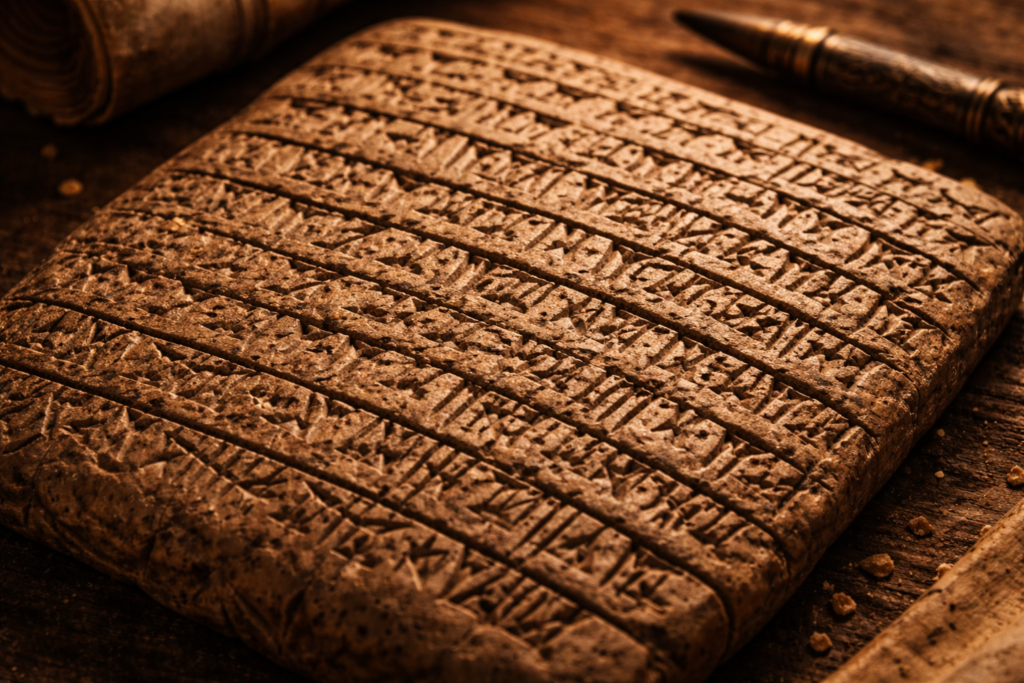
Fact 2: Writing Was Created for Record Keeping
Early writing was not used for storytelling. It was developed to track goods, trade, and resources in growing societies.
Fact 3: Writing Systems Were Invented Independently
Writing did not come from one place. It developed separately in regions like Mesopotamia, China, and Mesoamerica.
Fact 4: Pictures Came Before Words
Early writing used pictograms, simple drawings that represented objects or ideas, before evolving into more complex systems.
Fact 5: Alphabets Came Much Later
The first alphabetic systems appeared much later, such as the Phoenician alphabet around the 11th century BC.
Fact 6: Papyrus Was One of the First Writing Materials
Ancient Egyptians used papyrus as an early form of paper, along with reed pens and ink.
Fact 7: Writing Helped Build Civilisations
Writing allowed laws, trade records, and knowledge to be preserved, helping societies grow and organise more effectively.
Fact 8: The Printing Press Transformed Writing
The invention of the printing press allowed ideas to spread faster than ever before, making books widely available.

Fact 9: Writing Led to Scientific Progress
Printed books and journals helped share discoveries, contributing to major advancements in science and knowledge.
Fact 10: Writing Styles Evolved Over Time
From carved stone tablets to ink manuscripts and digital text, writing has constantly adapted to new technologies.
Fact 11: Writing Systems Can Be Very Different
Some systems use symbols for ideas, while others represent sounds, showing the diversity of human communication.
Fact 12: Literacy Was Once Rare
For much of history, only a small percentage of people could read and write, making literacy a powerful skill.
Fact 13: Writing Shaped Language
Written language helped standardise spelling, grammar, and vocabulary over time.
Fact 14: Digital Writing Is Changing Everything
Today, writing happens instantly across the world through emails, messages, and online platforms.

Fact 15: Writing Is Still Evolving
Even now, new forms of communication like emojis and digital shorthand are changing how people write and interact.
Related History Facts You Might Enjoy
Writing played a critical role in shaping early civilisations, allowing knowledge to be recorded and shared. This is especially evident in ancient Egypt facts, where writing systems were central to society.
Over time, written communication evolved alongside technology. This progression is clear in the internet revolution facts, where information is now shared instantly across the world.
👉 Discover more connections: History facts hub
👉 Explore technology and internet facts
FAQ Section
What are writing facts?
Writing facts are key insights about the history, development, and impact of writing systems across human civilisation.
When was writing invented?
Writing was invented around 3200 BC in ancient Mesopotamia with early systems like cuneiform.
Why is writing important?
Writing allows people to record information, share knowledge, and preserve history across generations.
How has writing changed over time?
Writing has evolved from symbols and carvings to printed books and digital communication used worldwide today.
Conclusion
Writing facts show how a simple system of symbols became one of the most powerful tools in human history. These writing facts highlight the evolution of communication and the lasting impact writing has had on civilisation and modern life.